
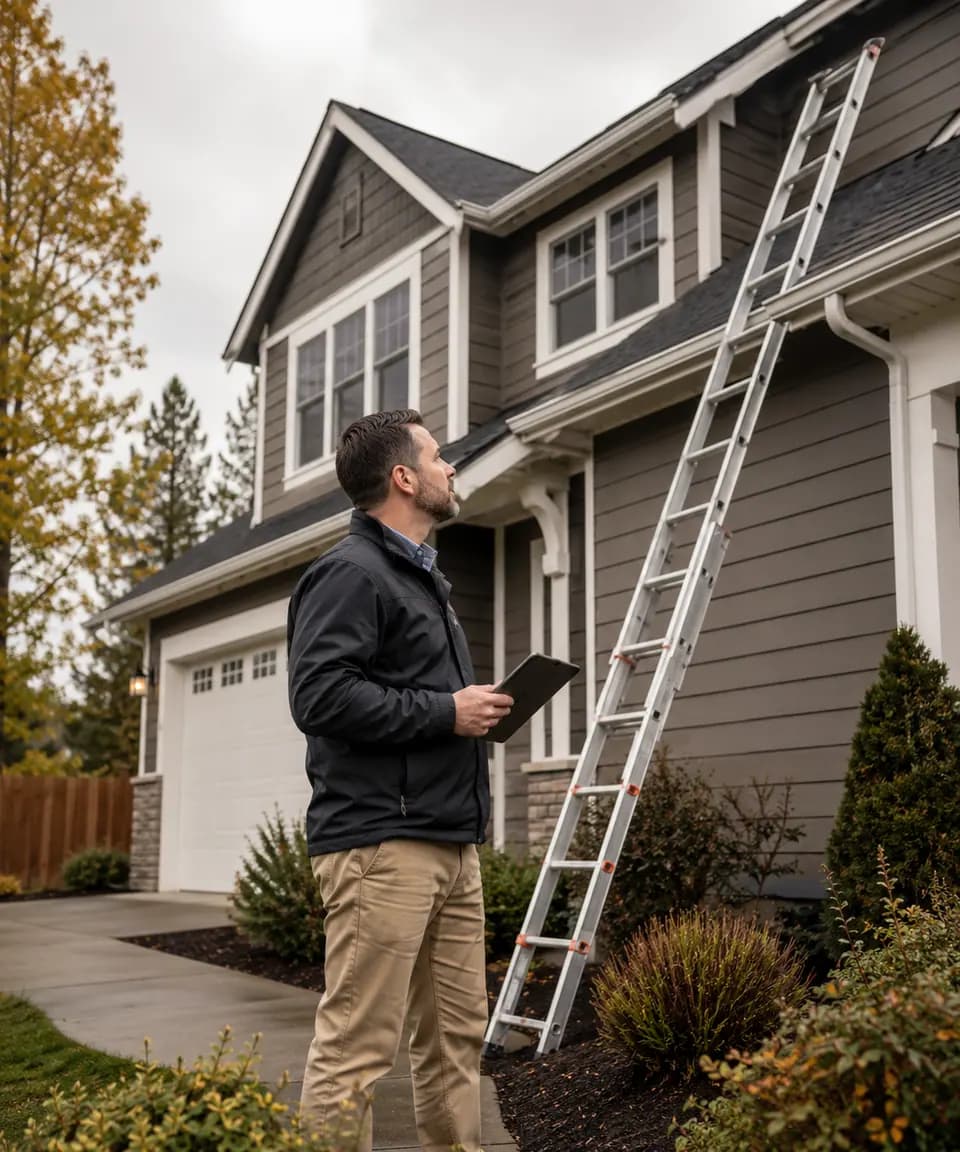

Bring your questions. Leave with a better understanding of the home.
- Confirm access and utilities
- Share your concerns
- Allow time for questions
Before the appointment
Share the property address, approximate size, age and any concerns you already have. A stain, a previous repair or an unfamiliar system can be a useful starting point for a conversation with your inspector.
Coordinate access with the owner or agent. Ask that utilities are on and that doors, equipment and access panels are reachable. Confirm your inspection scope and any additional testing before the visit.
What the inspector looks at
A general inspection evaluates accessible parts of the home, including the roof, structure, exterior, plumbing, electrical, heating and cooling systems. The inspector records observed concerns and any areas that could not be evaluated.
This is a visual inspection of the property’s condition at the time of the visit. It does not open finished walls or guarantee that every concealed problem will be found. Specialty tests have their own scope.
Read the InterNACHI Standards of PracticeMake room for the walkthrough
You are welcome to ask questions. Coordinate with your inspector on the best time to review the findings together, so the inspection itself can stay focused.
Ask what was observed, why it matters and what follow-up is recommended. If a term is unfamiliar, ask for an explanation in everyday language. You do not need construction experience to understand your own home.
Turn the report into a plan
Read the full report alongside its photos, rather than relying only on the summary. Separate safety concerns and recommended specialist evaluations from routine maintenance, then ask about anything that is unclear.
Pro-Spec’s residential packages include a same-day digital report. Keep it as a reference, discuss your priorities with your agent and arrange any recommended specialist visits within your transaction timeline.